It's Possible.
An End-of-Year Record on Building in 2025
Dec 31, 2025
I’m writing this at the end of the year to record where things actually are.
2025 didn’t look dramatic. Nothing big happened on the surface. The café kept running. There were no launches or announcements. From the outside, it probably looked like I was doing the same thing and thinking quietly.
But a lot was settling internally.
2023 was the year I adjusted. I realized that some of the things I was doing no longer fit where my passion was, or why I started this in the first place. From a business perspective, I couldn’t see a clear way to grow without constantly fighting the same battles. It often felt like the choice was between survival or adapting just to stay in place. I wrote about this before while trying to understand it myself.
The trap wasn’t confusion.
It was familiarity.
The traditional path was proven. Many people do well on it. I could see myself staying there and repeating the same patterns for years. Over time, it became clear that while it works for many, it wasn’t the right fit for me.
There’s pressure to be visible all the time.
I understand it, but visibility before clarity creates noise.
I kept the work quiet on purpose.
2024 was about slowing down. Simplifying. Learning new tools. Reading more. Testing ideas quietly. I wanted to understand which limits were real, and which were just habits or shared beliefs.
2025 was different.
It wasn’t about changing direction again.
It was about refining what I had already adjusted and seeing if it could hold.
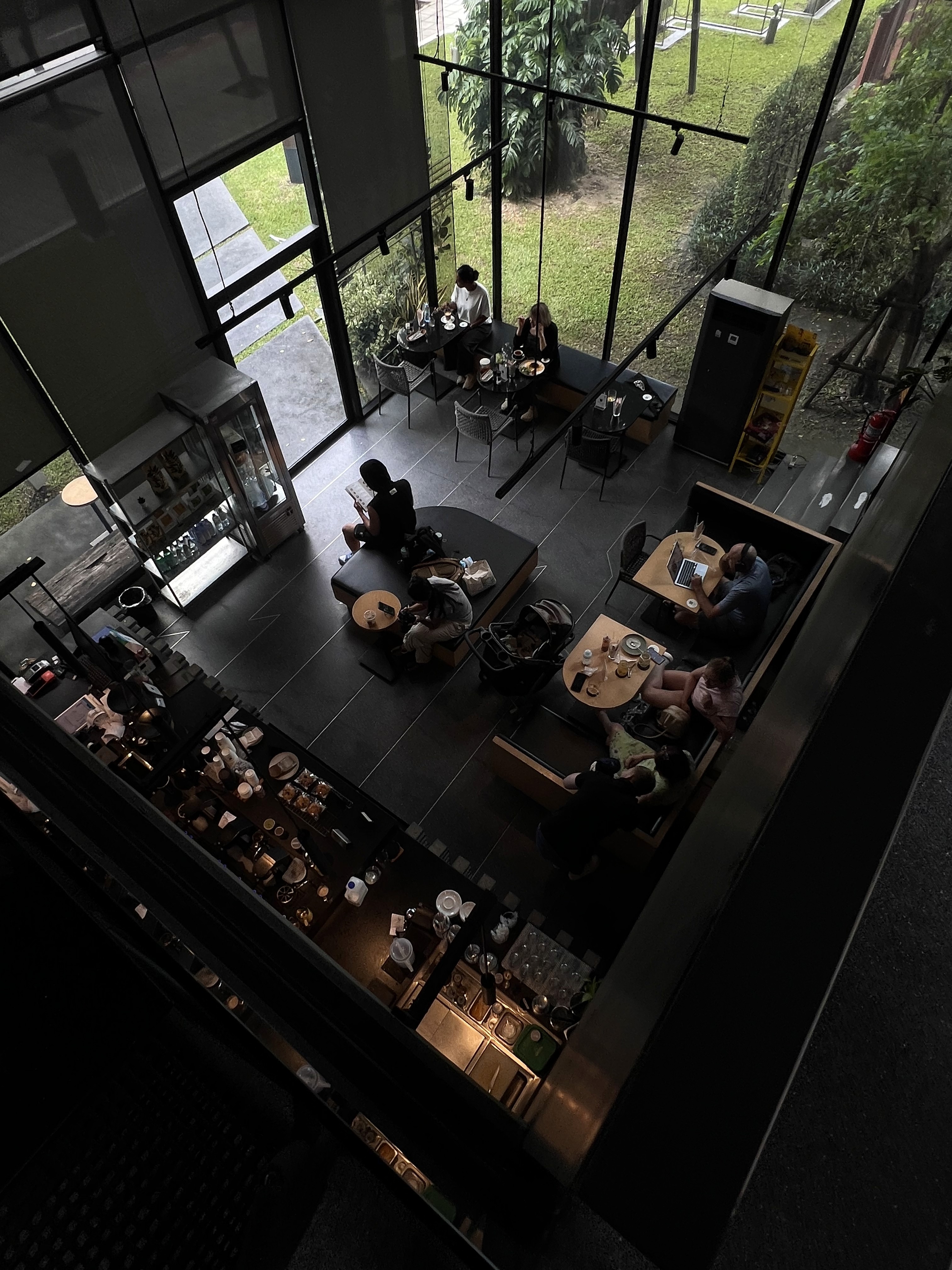
The café never stopped. The store kept operating through craft-driven food and beverage work that fits a modern lifestyle. Repetition. Taste. Discipline. Showing up every day and being part of people’s routines. That work keeps me grounded, especially when guests say thank you, even though the shop is old and needs constant care.
This year, Kaizen Coffee spent zero money on advertising or marketing. The product, the trust, and word of mouth built over the years carried us through. That history mattered more than any campaign could have.
At the same time, the ready-to-drink work brought real friction.
Earlier this year, the original branding was rejected by the FDA due to naming. The cans themselves initially held as expected, but as we went deeper, new issues surfaced.
In July, after a long round of iteration, a full prototype batch failed and had to be discarded. I thought we were ready. By September, we were still deep in research, at a point where it would have been reasonable to stop burning cash and pivot to a cold-chain launch just to keep moving.
Instead, we kept going. I needed to understand the nature of the coffee from every angle before making that decision.
By late October, a new testing batch finally held. In November, we received FDA approval for Code: 002. By December, the formulas for both Code: 001 and Code: 002 have remained stable so far.
Packaging is now about 30 days away from the first vision batch. There is still go-to-market work ahead, and a proper website to build, but the foundation finally feels stable. This work is about the cans, not the café or icedcoffee.com.
Alongside this, I spent much of the year researching how people might discover coffee in the future. How choices are made. What is already part of daily life, based on what I see in the café. How “best match” can be more meaningful than generic commercial choice. How habit, memory, and context shape decisions around quality coffee.
Those two sides stayed connected, and that’s where the real progress was. The direction became clearer through iteration, and this was the year the underlying thinking began to take shape.
Some of the work was tangible.
Systems replaced loose ideas. Language became clearer. Decisions stopped contradicting each other. I learned what could actually scale and what only sounded good in theory.
Some of it was invisible.
How I think about sequencing. When to move and when to wait. What needs to be true before something should exist in the world.
I also learned restraint.
Not every idea needs to be launched. Not every direction needs to be proven immediately. Pausing work isn’t abandoning it. Sometimes it’s how future momentum is protected.
Working mostly on my own made this unavoidable. There’s no external signal telling you what matters. You build judgment, then learn to trust it. Over time, decisions start to compound quietly.
As the year ends, I’m not measuring progress by wins or losses. I’m looking at whether the foundation makes sense. Whether the craft side and the future-facing side can actually support each other.
If they can, the next few years become interesting because of direction.
The world and business are difficult, and I don’t expect 2026 to be easier. It feels like a year that will require patience and careful movement.
2027 feels more aligned.
Less about searching, more about building from something that’s finally coherent.
For an end-of-year record, that feels right.